CDRT, Kirori Mal College
Report:
Disability Studies is an interdisciplinary field of academic enquiry that understands and
examines the experience of disabilement as a socio-cultural and political phenomena. In this
sense that the discipline radically alters the commonsensical understanding of disability as a
clinically diagnosed physical or mental deficit that hinders and at times even incapacitates the
individual from performing normative life functions. This popular conception of disability tends
to ‘dehumanise’ the disabled subject and associate the phenomena with ‘lack and difference’. If
the much shared goal of the society is to be attained such traditional notions of disability need
to be resisted.
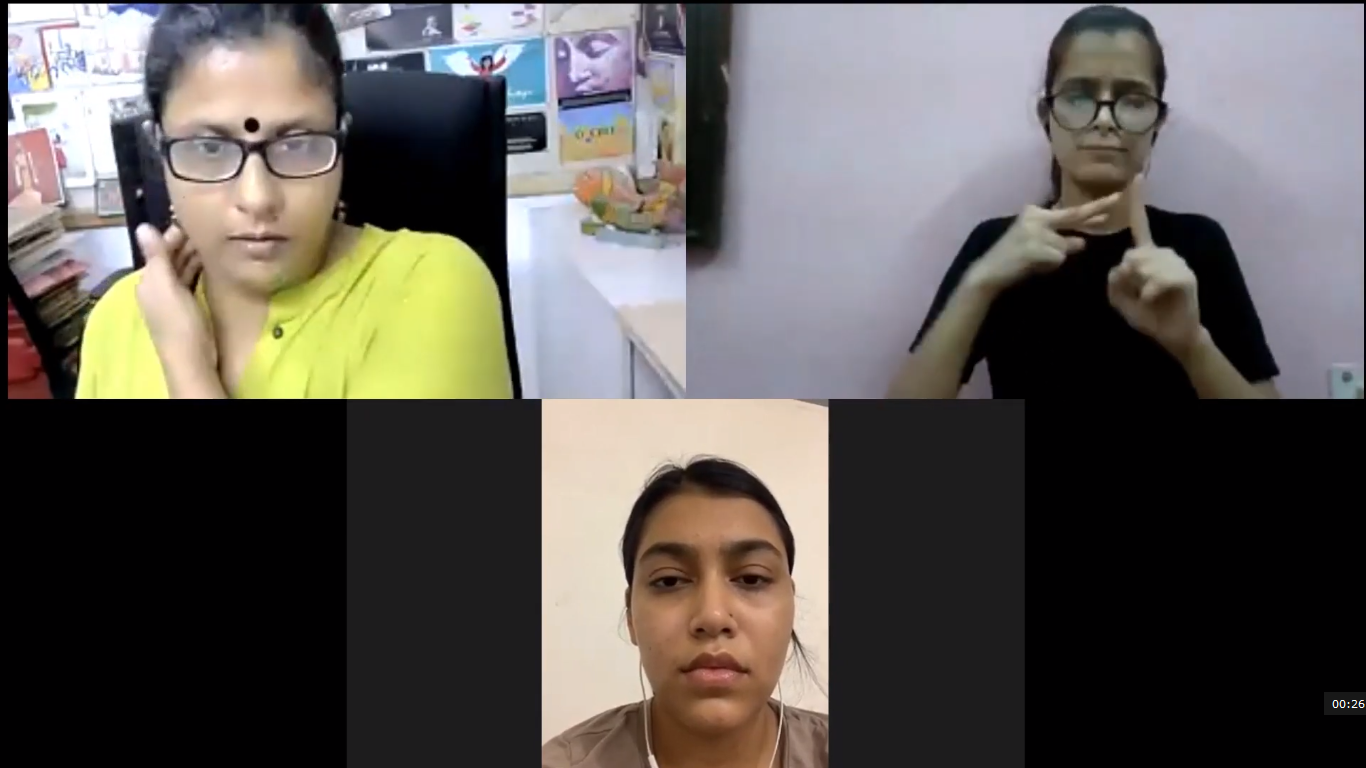
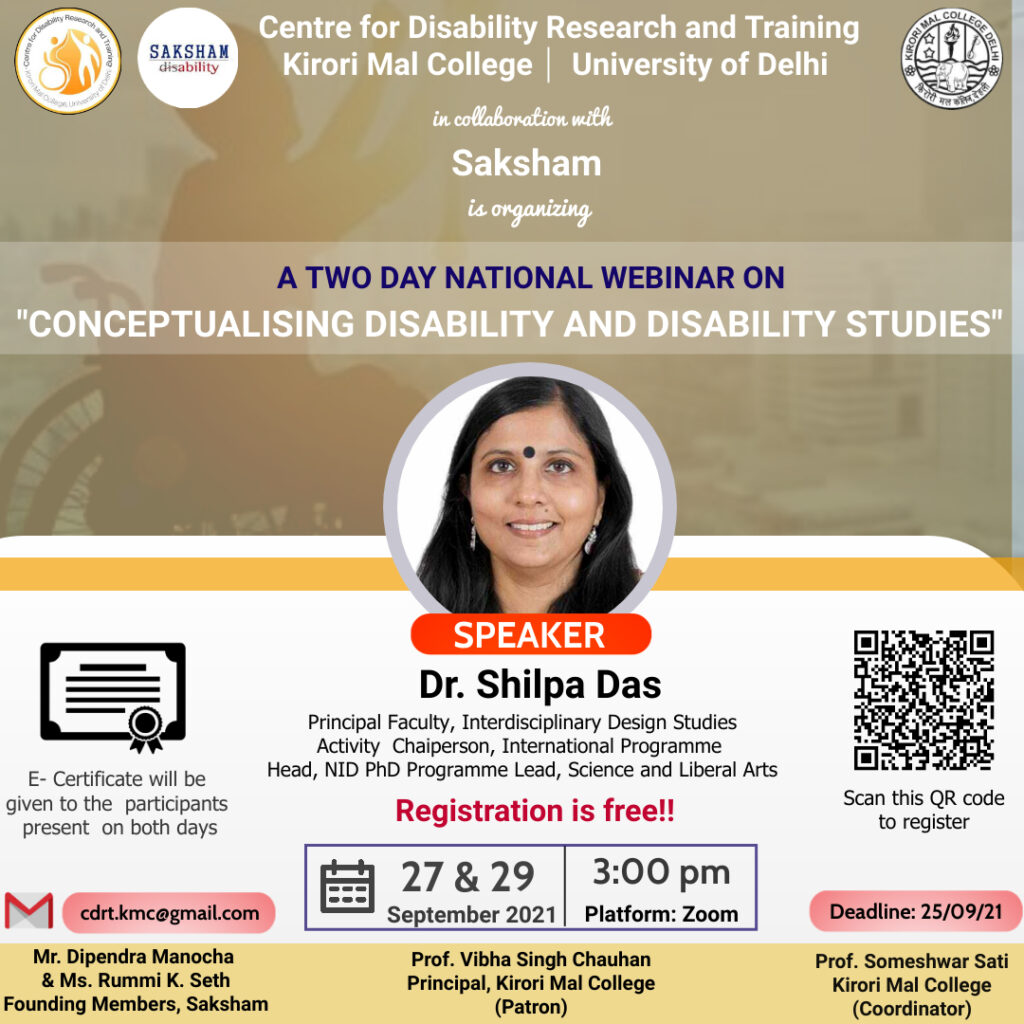
The Centre for Disability Research and Training (CDRT) therefore, inaugurated its series of
academic engagements by organising a National Webinar on Conceptualising Disability
and Disability Studies. The centre invited Professor Shilpa Das from National Institute of
Design, Ahmedabad to deliver a series of 2 lectures and acquaint the 287 participants who had
registered for the webinar with the basic concepts pertaining to disability and disability studies,
how are these generally understood by the public at large, how they should be perceived and
how can the change in this perception be brought about.
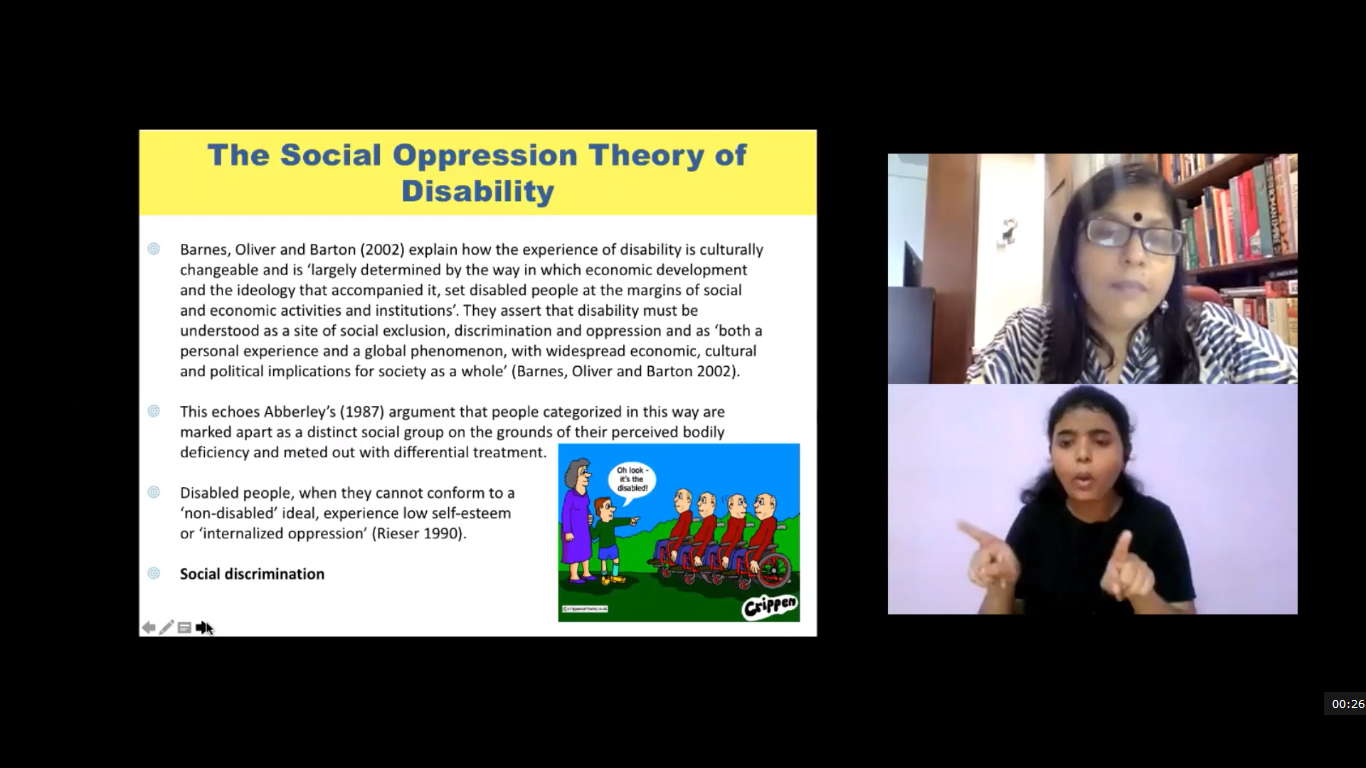
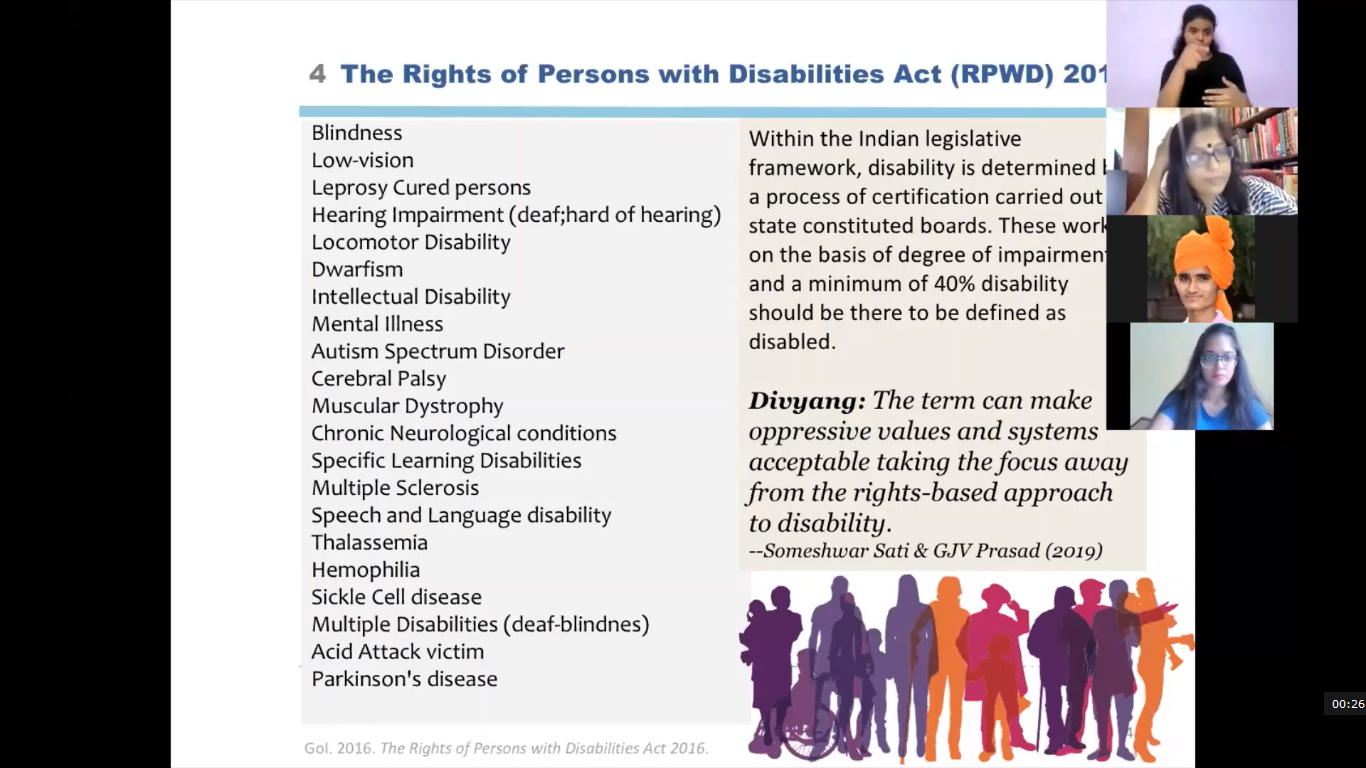
The opening lecture focused on how disability has been traditionally perceived over the ages and
the need to radically alter this perception by disembedding the experience of disablement from a
medical discourse to a socio-cultural and political one. She lamented that the public at large still
views disability as a medical phenomena and traces its genesis to the human body exonerating,
as it were society from any form of culpability in shaping the experience of disablement. She laid
stress on the need of going beyond the biological determinants of the phenomena and locating it
firmly within the realm of the social, cultural and political. Her talk went on to analyse the
various terms used to describe disabled subject. Tracing the history of the evolution and the
semantic underpinnings of the various terms like handicapped, physically challenged,
differently/specially abled, she laid stress on using the right phrase to describe people with
impairment. According to her, persons with disability and disabled people are the only two
acceptable and politically correct terms to be used while referring to them. The talk concluded
with an incisive analysis of the various models of disability, religious/social/political/legal and
right based.
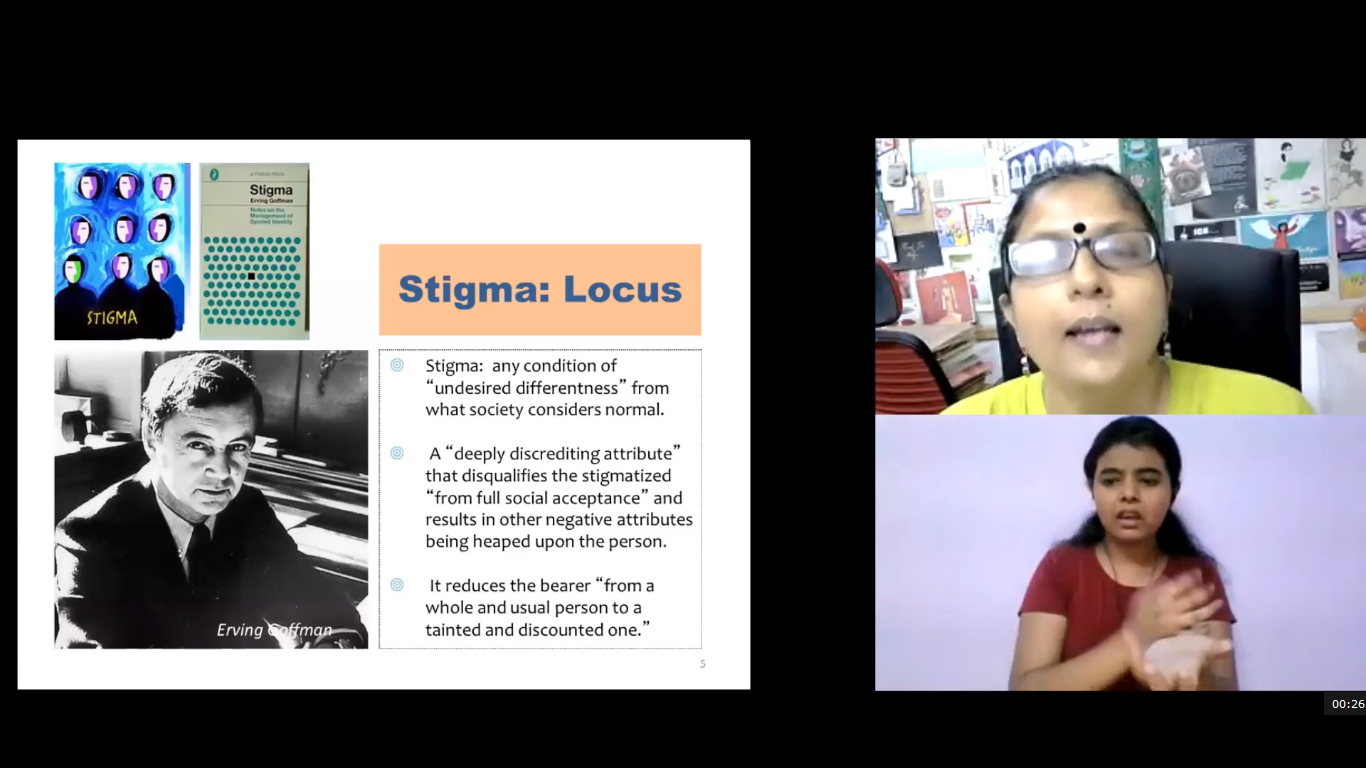
The second lecture focused on the concept of Stigma, its meaning and socio-cultural political
ramifications. The remainder of her talk systematically outlined the evolution of disability
studies as an academic discipline in the 1960s. From its early incarnation as a set of ideas that
gave intellectual impetus to disability activism, disability studies today has become an
interdisciplinary model of academic inquiry that strikes at the very roots of the ableist thinking.
Infact to Prof. Das, disability studies is opening up new discursive spaces for revising the ways
we perceive and respond to disability and disability studies. This webinar proved to be an eye-
opener to the participants who hitherto knew very little about disability and were blissfully
unaware of the opportunities disability studies as a discipline offers. The 2 lectures laid the
ground for discussions on the various research possibilities, a subject that was taken up bysubsequent seminars organised by the Centre.